

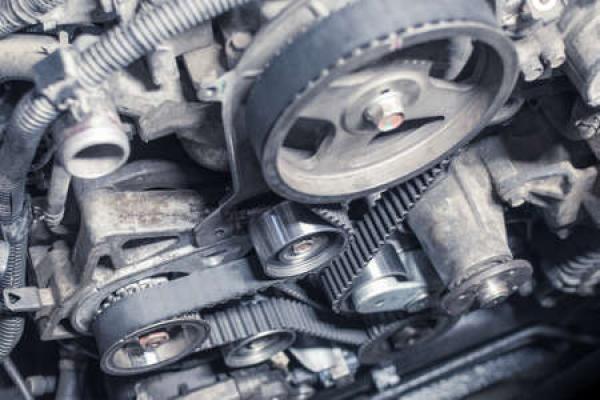
A cambelt (or timing belt) controls the timing of the engine’s valves. When a cambelt breaks most engines will be badly damaged and are costly to repair.
Your vehicle manufacturer will recommend the number of kilometres driven before replacement is required. Most Japanese vehicles are around 100,000kms or 5 years. European vehicle replacement cam belts are sooner.
Need advice or your cambelt replaced?
Signs of a worn Cambelt
- Excessive ExhaustIf your car fires more than a typical amount of exhaust, check your cambelt.
- Car Difficult to StartA car with high mileage and hard to start, check your cambelt.
- Hot, Leaky EngineOlder rubber cam belts degrade in hot temperatures and exposure to motor oil. If your car is running hot and has a leaky engine the life expectancy of your cam belt is lowered. Newer cam belts are made of heat resistant materials and do cause these problems.
- Car ShakesA working cambelt is perfectly timed to the valves and pistons. If the belt is degrading the timing will be out causing the car to shake.
Engine Cambelt Replacement
- The cambelt covers are removed, cambelt removed and inspected
- Crank, camshaft, oil pump and oil seals are inspected for leaks(oil contamination is one of the most common causes of cambelt failure)
- The condition of the water pump c is checked, replaced or reported as required
- Cambelt idler bearings are checked and replaced as required
- Cam belt tensioner is checked and replace as required
- Reassemble with new cambelt
- Refit covers etc
- Run, check and set ignition timing (if applicable)
Cambelt questions, answered
Common questions about cambelt (timing belt) replacement at our Frankton, Hamilton workshop.
What does a cambelt do?
A cambelt, also called a timing belt, keeps the engine’s valves opening and closing in time with the pistons. If it breaks, most engines are badly damaged and the repair is expensive.
When should I replace my cambelt?
Follow the interval in your vehicle manufacturer’s schedule. For most Japanese vehicles this is around 100,000 km or 5 years, whichever comes first. Many European vehicles need it sooner. Not sure when yours is due? Call us on 07 848 1010 with your make and model.
What happens if my cambelt breaks?
The engine stops straight away. In most engines the valves and pistons then hit each other, which can bend valves and damage the engine. That repair usually costs far more than replacing the cambelt on time.
Are there warning signs of a worn cambelt?
Often there is no warning before a cambelt fails, which is why replacing it on schedule matters. Signs that can point to a cambelt problem include the engine shaking or running roughly, difficulty starting on a high-mileage car, and oil leaks or overheating near the front of the engine, which shorten the belt’s life.
Does my car have a cambelt or a timing chain?
Many engines use a rubber cambelt, but some use a metal timing chain instead. Your owner’s manual will tell you, or call us with your make, model and engine and we will check for you.
What is included in a cambelt replacement?
- Cambelt covers removed, and the old cambelt removed and inspected.
- Crank, camshaft and oil pump seals inspected for oil leaks. Oil contamination is one of the most common causes of cambelt failure.
- Water pump condition checked, and replaced or reported as needed.
- Idler bearings and tensioner checked, and replaced as needed.
- New cambelt fitted and covers refitted.
- Engine run, checked and ignition timing set where applicable.
Should I replace the water pump at the same time?
On many engines the water pump sits behind the cambelt, so replacing it at the same time saves paying for the same labour twice. We check its condition during every cambelt job and let you know before we replace it.
Where are you and how do I book?
We are at 6 Empire Street, Frankton, Hamilton, open Monday to Friday, 8am to 5.15pm. Book online using the form on our home page or call 07 848 1010.